From Compliance to Prevention: Safety Training with Simulation
How to move beyond the sign-in sheet and let your people practice the decisions that actually prevent incidents.
- PDF · 10 pages · 15 min
- For EHS, training, HR and operations leaders
What's inside
- Why compliance-driven training rarely turns into safe behavior on the floor
- A table of high-risk tasks and the critical decisions worth simulating
- A six-step method to design a scenario around a single decision
- Leading indicators, DC-3 documentation basics and a checklist for your first lab
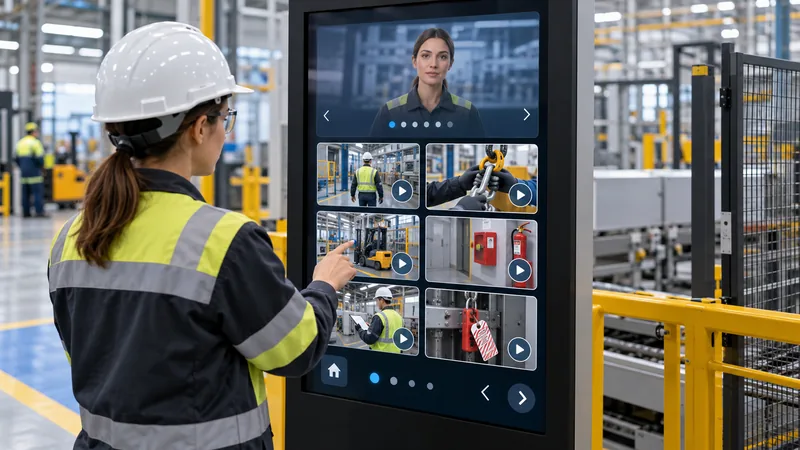
 WhitepaperFrom Compliance to Prevention: Safety Training with Simulation
Download it free
Leave your details and the download starts right away.
What it's about
In many plants, warehouses and distribution centers, safety training is built around one question: can we prove people were trained? The answer is usually a signed attendance sheet, a video and a multiple-choice quiz. That covers a necessary part of the job, the evidence, but it leaves the question that matters on the floor unanswered: will this person make the right call when they are actually facing the hazard?
This whitepaper makes the case for a shift from compliance to prevention. The core idea is simple. Serious incidents rarely happen because someone didn't know the rule; they happen at specific decision points, under time pressure, with incomplete information and a tempting shortcut. Those moments can be identified, turned into scenarios and practiced in simulation as many times as needed, without putting anyone at risk.
Inside you'll find a map of high-risk tasks (lockout/tagout, forklifts, work at heights, confined spaces, hazardous chemicals and emergencies) with the critical decisions worth simulating, a scenario design method, a set of leading indicators, general guidance on documenting training in Mexico, and a checklist to launch your first safety lab.
What you take away.
Training records are mandatory, but they are not the same as competence. You need to manage both.
Design training around critical decisions, not topics: what the person does at the moment the hazard shows up.
Simulation lets people practice exactly what can't be practiced for real: making a mistake, seeing the consequence and trying again.
Pair lagging indicators (incidents) with leading indicators based on how people perform in practice.
Simulation doesn't replace supervised hands-on practice or regulatory requirements; it prepares people for them and makes them more effective.
More reports and whitepapers.
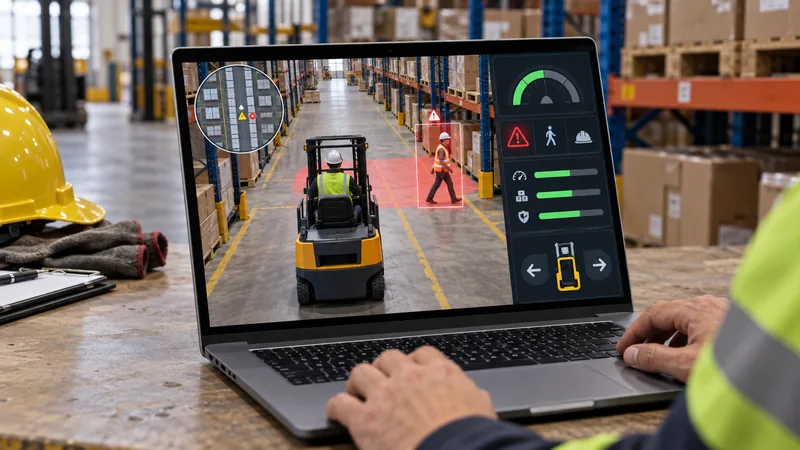 WhitepaperLearning by Doing: Why Simulation Beats Traditional TrainingWhitepaper · 10 pagesLearning by Doing: Why Simulation Beats Traditional TrainingForgetting curve, deliberate practice and safe failure: why simulating real work beats traditional courses, and which processes to simulate first.
 WhitepaperGenerative AI in Frontline TrainingWhitepaper · 9 pagesGenerative AI in Frontline TrainingUse cases, risks and a governance framework for AI tutors and roleplays with frontline teams, plus a phased roadmap and a pilot checklist.
 ReportHow to Calculate Training ROI: Model, Template and Worked ExampleReport · 11 pagesHow to Calculate Training ROI: Model, Template and Worked ExampleKirkpatrick, Phillips, formulas, operational KPIs to monetize, a fill-in template and an illustrative example worked step by step.